
How to Start Freelancing Step by Step
Freelancing has become a popular career option for students, professionals, and individuals seeking flexibility, independence, and practical experience. However, for beginners, understanding how to start freelancing can feel overwhelming. This guide explains the process step by step in a clear and structured manner.
What Is Freelancing?
Freelancing is a form of self-employment where individuals provide services to clients on a project, contract, or hourly basis rather than working as full-time employees. Freelancers have control over their workload, pricing, clients, and work schedule.
Freelancing is suitable for students, working professionals, career switchers, and anyone seeking flexibility and independence.
Step 1: Identify a Marketable Skill
The foundation of a successful freelancing career lies in offering a skill that is in demand. Beginners often make the mistake of trying to learn multiple skills at once. Instead, it is more effective to focus on one core skill and develop expertise in it.
Popular freelancing skills include:
Content writing and copywriting
Social media management
Graphic design
Video editing
Digital marketing and SEO
Web development
Data entry and virtual assistance
Choose a skill that aligns with your interests, aptitude, and long-term career goals.
Step 2: Learn and Develop Your Skill
Once a skill is selected, structured learning becomes essential. Freelancers are expected to deliver quality work, so continuous improvement is critical.
Skill development can be achieved through:
-
Online courses and tutorials
-
Industry blogs and documentation
-
Practice projects and mock assignments
-
Internships or volunteer work
Practical experience is as important as theoretical knowledge. Regular practice helps improve efficiency, confidence, and output quality.
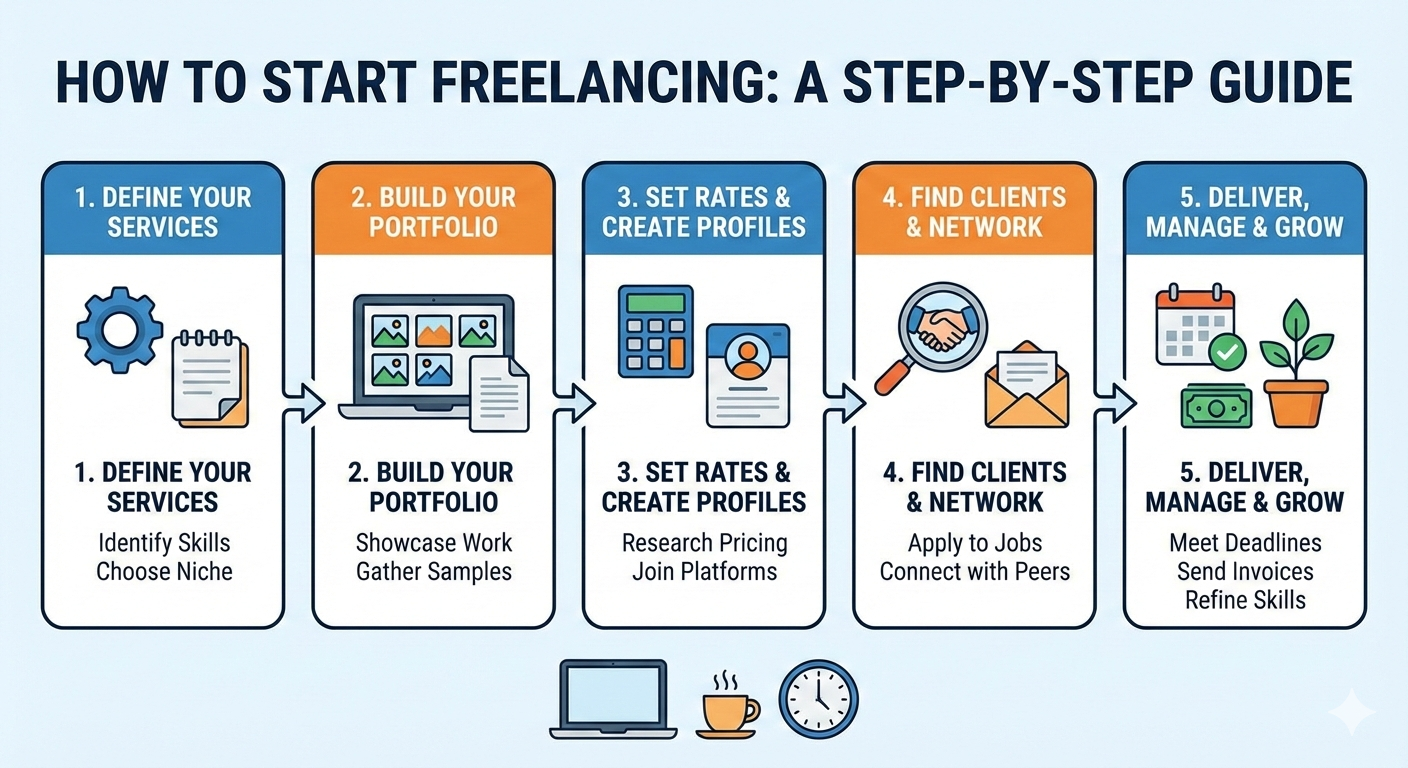
Step 3: Understand the Freelancing Market
Before offering services, it is important to understand how the freelancing market operates. Research the following:
Industry demand for your skill
Typical pricing structures
Client expectations and deliverables
Competition within your niche
Market awareness helps you position your services effectively and avoid underpricing or overpromising.
Step 4: Build a Professional Portfolio
A portfolio is one of the most important assets for a freelancer. It demonstrates your skills, experience, and working style to potential clients.
A professional portfolio should include:
Samples of completed work
Practice or mock projects (for beginners)
Clear descriptions of each project
Your role, tools used, and results achieved
Even if you have not worked with paid clients, self-initiated projects are acceptable as long as they reflect your capabilities.
Step 5: Create Strong Freelancing Profiles
Freelancing platforms and professional social media profiles act as your digital identity. A well-crafted profile increases visibility and credibility. Your profile should include: A clear and professional headline A concise summary highlighting your expertise Services offered and areas of specialization Portfolio links or attachments Professional language with no grammatical errors Your profile should focus on how you can solve client problems rather than simply listing skills.
Step 6: Apply for Projects Strategically
Applying for freelance work requires patience and consistency. Beginners often face rejection, which is a normal part of the process.
When applying for projects:
-
Read the job description carefully
-
Write customized proposals for each client
-
Address the client’s needs directly
-
Explain how your skills add value
Avoid sending generic proposals. Personalized applications significantly improve response rates.
Step 7: Set Fair and Competitive Pricing
Pricing is a critical aspect of freelancing. Beginners should research market rates and start with competitive pricing while ensuring their work is valued fairly.
Pricing models include:
-
Hourly rates
-
Fixed project-based pricing
-
Monthly retainers
As your experience, portfolio, and demand grow, pricing should be revised accordingly.
Step 8: Communicate Professionally with Clients
Strong communication is essential for building trust and maintaining long-term relationships. Professional freelancers:
-
Respond to messages promptly
-
Clarify expectations before starting work
-
Provide regular updates
-
Respect deadlines and commitments
Clear communication reduces misunderstandings and increases client satisfaction.
Step 9: Deliver Quality Work and Meet Deadlines
Consistency and reliability are key factors in freelancing success. Delivering high-quality work on time helps build credibility and encourages repeat business.
Always:
-
Follow project guidelines
-
Proofread and review work before submission
-
Be open to constructive feedback
Satisfied clients are more likely to provide referrals and long-term projects.
Step 10: Build Long-Term Growth and Stability
Freelancing is not a short-term activity but a long-term career path. Sustainable growth requires:
-
Continuous skill upgrading
-
Expanding service offerings gradually
-
Building a personal brand
-
Maintaining professional ethics
Over time, freelancers can move towards higher-paying clients, retainers, and even agency-level work.
Conclusion
Freelancing offers flexibility, independence, and the opportunity to build a career on your own terms. While the journey may feel slow in the beginning, consistent effort, professionalism, and continuous learning lead to long-term success.
By focusing on skill development, strategic planning, and professional conduct, anyone can build a sustainable freelancing career from scratch.
Looking to start freelancing professionally? Apply the steps shared in this guide, stay consistent, and begin building a sustainable freelance career today.Call to Action
If you are serious about building a successful freelancing career, the right guidance and skill development are essential. Vidya Sarthi Institute of Digital Marketing provides industry-focused training, practical exposure, and expert mentorship to help you gain in-demand digital skills and start freelancing with confidence.
Take the next step in your professional journey. Enroll with Vidya Sarthi Institute of Digital Marketing and begin building a strong, sustainable freelancing career today.